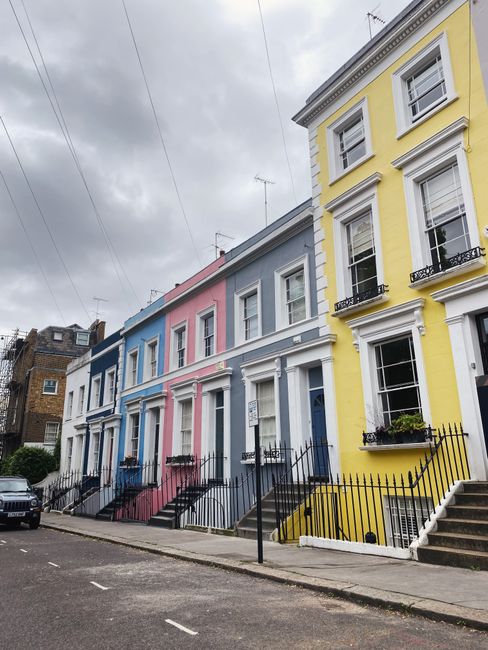
Golborne Road removals for narrow terraces and tight parking: a practical guide for smoother moving day
If you are planning Golborne Road removals for narrow terraces and tight parking, you already know this is not a standard, easy-street move. The buildings are close together, the parking can be unforgiving, and one badly placed van can throw the whole morning off. That's the reality of moving in this part of London. The good news? With the right preparation, a calm approach, and a team that understands local access issues, the day can run far more smoothly than people expect.
This guide walks through what makes these moves tricky, how professional removals teams handle them, what to check before moving day, and where storage can help if access is limited. It is written for people who want practical answers, not vague reassurance. Let's face it, when you are balancing boxes on a tight stairwell, you want the plan to work.
- Why Golborne Road removals for narrow terraces and tight parking Matters
- How Golborne Road removals for narrow terraces and tight parking Works
- Key Benefits and Practical Advantages
- Who This Is For and When It Makes Sense
- Step-by-Step Guidance
- Expert Tips for Better Results
- Common Mistakes to Avoid
- Tools, Resources and Recommendations
- Law, Compliance, Standards, or Best Practice
- Options, Methods, or Comparison Table
- Case Study or Real-World Example
- Practical Checklist
- Conclusion
- Frequently Asked Questions
Why Golborne Road removals for narrow terraces and tight parking Matters
Golborne Road and the surrounding streets can be brilliant to live in, but removals here come with the kind of access headaches people often underestimate. Terrace houses may have narrow hallways, steep internal stairs, awkward front steps, and very little room to manoeuvre bulky items. Add resident parking, passing traffic, delivery vans, and the occasional double-parked car, and the whole process becomes a logistics exercise.
Why does this matter so much? Because moving is rarely just about transport. It is about timing, distance from door to vehicle, safe handling, and keeping stress down when the street is working against you. A sofa that fits easily in a warehouse can become a very different problem on a cramped staircase. That is why planning for access is not a side note. It is the job.
In practice, the best moves in tight London streets are the ones where the team has already thought through where the van will stop, how long the carry will be, and what happens if parking is lost halfway through loading. The more detailed the plan, the less likely you are to be standing outside at 8:15 a.m. wondering where the vehicle has gone.
If you are comparing local help, a well-organised local removals service can be especially useful because proximity often means better route familiarity and quicker turnaround. For smaller loads, a flexible man and van option may also fit the job neatly.
How Golborne Road removals for narrow terraces and tight parking Works
A good move in this setting usually starts before moving day. The removals team will want to understand what type of property you have, how many flights of stairs there are, whether there is rear access, and how close a vehicle can realistically get to the front door. That information shapes the van size, crew size, and the order in which items are loaded.
Here is the basic flow that works best in narrow-terrace moves:
- Pre-move survey or detailed inventory. The team identifies bulky furniture, fragile items, and anything that may need dismantling.
- Access planning. They assess parking, loading restrictions, turning space, stairs, and any obstructions such as railings, planters, or tight front paths.
- Packing and protection. Items are wrapped, boxed, labelled, and prepared so they can be carried quickly and safely.
- Vehicle positioning. The van is placed as close as possible to reduce carrying distance and time exposed to traffic or weather.
- Loading strategy. The heaviest and most robust items go in first, with fragile pieces secured last and protected from shifting.
- Delivery and unloading. At the destination, the process is reversed with particular care taken on stairs, corners, and narrow doorways.
That sounds straightforward, but in real life, small details decide the day. A chest of drawers might need to be emptied before moving. A bed frame may need to be taken apart at the front room rather than the bedroom simply because the landing is too tight. You learn quickly that the best movers are practical, not precious about the process.
For homes with lots of furniture or especially awkward access, combining moving with furniture storage can reduce pressure. If you need the entire property cleared or staged over a few days, removals and storage may be the cleaner solution.
Key Benefits and Practical Advantages
Choosing a service that understands compact terrace moves gives you more than convenience. It changes the whole feel of the day.
- Less risk of delays. A team used to tight parking will know how to plan around short loading windows and street congestion.
- Safer handling. Narrow stairs and small doorways demand better lifting technique and more careful item protection.
- Better use of vehicle space. When access is awkward, the load has to be organised properly to avoid wasted trips.
- Lower stress for you. You are not trying to improvise parking or carry a sofa alone while traffic builds behind you.
- More flexibility with property size. Small flats, maisonettes, and terraces often need a smaller, more agile setup than a standard large lorry.
There is also a quieter benefit people overlook: pace. When the removal crew already expects difficult access, they are less likely to panic when the obvious route is not the easy route. That calmness is worth a lot on a busy street.
If you only have a few large items or are moving from a compact flat, small removals can be a better fit than a big, one-size-fits-all service. And if your move is tied to a flat, it makes sense to review flat removals as a service category too.
Who This Is For and When It Makes Sense
This kind of move is not only for people on Golborne Road itself. It is relevant to anyone in nearby terraces, mews-style streets, compact maisonettes, or older properties with limited frontage and no private driveway.
It makes sense if you:
- live in a narrow terrace with stairs or awkward landings
- have limited or controlled parking outside your property
- need a smaller, more agile moving setup
- are moving furniture that needs careful handling through tight spaces
- cannot guarantee a van will stay parked directly outside all morning
- want storage before, during, or after the move
It is also a sensible choice for students, renters, and people doing short-notice moves. If the timing is messy, storage can smooth things out. A room can be emptied before a completion date, or furniture can be held temporarily while you wait for keys. In those cases, short-term storage or mobile self storage may make the whole process much less frantic.
For families and longer household moves, house removals may be the better umbrella service, especially where the move involves multiple rooms, children's furniture, and heavier household items. And if the move is especially time-sensitive, household storage can act as a useful buffer.
Step-by-Step Guidance
Moving in a narrow terrace is much easier when the whole job is broken into stages. Here is a practical sequence that works well.
1. Measure the awkward bits first
Measure door widths, stair turns, hallway bottlenecks, and anything bulky that needs to come out. A tape measure is boring, yes, but it saves arguments with the sofa later. Check the height of bannisters, the width of the tightest landing turn, and any low ceilings under stairs.
2. Identify items that may need dismantling
Bed frames, wardrobes, dining tables, and some desks are far easier to move in pieces. Do not wait until moving morning to discover that a wardrobe will not turn the landing corner. That is the sort of surprise nobody enjoys.
3. Plan the packing order
Pack by room and by priority. Put essential items in clearly labelled boxes. Keep small screws, cables, and brackets together in a sealed bag. It sounds simple, but this is where many moves unravel.
4. Decide where the van can stop
If the street is tight, think about whether the van should be placed at the nearest workable point rather than directly outside the front door. The shortest walking distance is not always the safest loading position.
5. Build in a time cushion
Tight parking changes quickly. A delivery vehicle, refuse lorry, or neighbour's car can shift the plan. Leaving extra time in the schedule gives everyone breathing room.
6. Use storage if the move is split across dates
If keys are delayed or the new place is not ready, temporary storage keeps furniture safe and stops you from paying for rushed decisions. The most flexible options are often the simplest ones.
If you want a service that brings items to and from storage in one process, removals paired with storage can make staging and split-day moves much smoother. For business owners or home workers, office removals and office storage may be more relevant if desks, files, or equipment are involved.
Expert Tips for Better Results
A few small habits make a surprisingly big difference in a tight-access move.
- Take the heaviest items apart early. Do not wait until the van is outside. Disassembly takes longer than people think.
- Protect the route, not just the furniture. Stair corners, skirting boards, and front steps are all vulnerable.
- Label fragile boxes on more than one side. It sounds basic. It is basic. And it works.
- Keep essentials separate. Keys, chargers, medication, documents, and a kettle should not disappear into the main load.
- Think about the weather. A wet London morning changes the pace of carrying and can make steps slippery.
- Use the smallest practical vehicle. In a street with tight access, agility often beats capacity.
One useful bit of practical judgment: if you are already worried about parking, do not make the move more complicated with unnecessary last-minute collections, extra errands, or "while we're at it" jobs. Those nearly always add friction. You want fewer moving parts, not more.
And if you know that access will be limited for a while, it may be worth looking at self storage or secure storage before the move starts. A calm timeline is underrated.
Common Mistakes to Avoid
Most removal problems in narrow terraces are not dramatic disasters. They are small planning errors that snowball.
- Assuming parking will be available. Do not treat the street like a private loading bay.
- Forgetting about access upstairs. The front door is only half the challenge.
- Underestimating bulky furniture. A sofa or wardrobe may fit through a door but not around the corner before it.
- Packing too late. Rushed packing leads to breakages and confusion.
- Not telling the removals team about restrictions. If they arrive cold, they have to solve problems on the spot.
- Leaving it all to one person. Moves work better when each person knows what they are responsible for.
Another common one: people think a "small" move does not need much planning. In reality, a small flat with awful access can be more awkward than a larger home with a driveway. Funny old thing, that.
Tools, Resources and Recommendations
You do not need a van full of specialist equipment, but a few things are genuinely helpful.
- Measuring tape for doorways, stair turns, and furniture dimensions
- Furniture blankets and wraps to reduce scuffs and knocks
- Labels and marker pens for room-by-room sorting
- Strong boxes that can handle stacking and short carries
- Socket key or basic tool kit for dismantling beds, shelving, and flat-pack furniture
- Hand trolley or sack truck where the route allows it
For people who want moving and packing to feel more manageable, packing services can be a wise choice. It saves time, reduces breakages, and takes pressure off the day before the move, which is often the worst bit anyway.
If the move includes fragile household contents, it can also help to separate valuables, documents, and key paperwork. In that case, document storage may be useful for longer-term organisation, especially if you are between addresses or running a small business from home.
Law, Compliance, Standards, or Best Practice
For this kind of move, the most relevant compliance issues are usually practical rather than complicated. Removal teams should work in line with sensible manual handling practice, safe loading methods, and general vehicle safety. In plain English: lifting should be planned, not improvised, and the load should be secured properly before the van moves.
If a job affects shared access, parking bays, or loading restrictions, it is wise to check local arrangements in advance rather than assuming things will be fine on the day. Different streets can have different restrictions, and enforcement can be very real in central London. You do not want the van ticketed while a sofa is halfway through the front door. That would be, frankly, annoying.
Customers should also expect clear terms around liability, item protection, and service limits. That is why it helps to review a company's terms and conditions, along with its insurance and safety information. If you want to understand how a business handles issues and complaints, you can also look at its complaints procedure.
Good practice also includes clear communication about access, a realistic schedule, and transparent pricing. If you are comparing options, the detail on pricing and quotes should help you understand what is included before moving day gets close.
Options, Methods, or Comparison Table
Not every Golborne Road move needs the same setup. The right choice depends on volume, access, timing, and how much furniture you are moving.
| Option | Best for | Strengths | Limitations |
|---|---|---|---|
| Man and van | Smaller loads, single flats, flexible timing | Agile in tight streets, often quicker for simple jobs | Less suitable for larger household moves |
| Full removals service | Whole homes, multiple rooms, heavier furniture | More support, better for complex access and larger inventories | Can be more than you need for a very small move |
| Removals plus storage | Delayed completion, staged moves, downsizing | Flexible, reduces pressure, keeps items safe between dates | Requires extra planning and coordination |
| Mobile self storage | People who want collection and storage without repeated loading | Convenient, good for tight schedules | May not suit urgent full-house moves |
For many terrace-house moves, the sweet spot is either a compact removals team or a man and van setup with storage added if needed. For people moving between two small places, that combination can be the difference between a smooth day and a chaotic one.
Case Study or Real-World Example
Here is a simple real-world example based on a typical London terrace move. A couple moving out of a narrow property had a sofa bed, two wardrobes, several boxes of books, and a dining table that would not fit through the hallway unless it was dismantled. Parking outside the house was limited, and the nearest workable stop was a short carry away. Nothing dramatic, just awkward.
The move was made easier by three choices. First, the wardrobes were dismantled before the van arrived. Second, the boxes were packed by room so unloading at the new place was quicker. Third, one bulky item that did not need to go immediately was placed into short-term storage for a week.
The difference was noticeable. There was less pressure on the stairs, the loading took a steady pace, and nobody had to make a rushed decision about where to leave a piece of furniture while waiting for keys. It was not glamorous, but it worked. And on moving day, working is the whole point.
Practical Checklist
Use this checklist in the final 48 hours before the move.
- Measure the largest items and the tightest access points
- Confirm parking or loading arrangements for the street
- Tell the removals team about stairs, low ceilings, or awkward corners
- Dismantle beds, tables, or wardrobes if needed
- Label every box by room and priority
- Set aside essentials for the first night
- Protect floors, banisters, and vulnerable walls where possible
- Separate fragile items and valuables
- Check whether any items should go to storage first
- Review timings so there is a buffer for traffic or access delays
Expert summary: in tight terrace moves, the winning formula is simple preparation, realistic parking assumptions, and a moving plan that does not rely on luck. The less you leave to the last minute, the calmer the day tends to be.
Conclusion
Golborne Road removals for narrow terraces and tight parking are all about preparation, timing, and choosing the right support. The street conditions are not ideal, but they are manageable when the route, vehicle, packing, and access plan are thought through properly. A good move here is rarely about speed alone. It is about control.
If you are moving from a terrace with limited parking, start by measuring, sorting, and deciding what truly needs to travel with you on day one. Storage can take the edge off awkward timing, and the right removals service can make the whole thing feel much less like a scramble. You will notice the difference almost immediately.
Get a free quote today and see how much you can save.
And if the day still feels a bit too full, that is normal. One careful step at a time usually gets you there.
Frequently Asked Questions
What makes Golborne Road removals harder than a standard house move?
The main issues are narrow streets, limited parking, tight staircases, and older terrace layouts. Those factors mean the team has to plan vehicle placement, carrying distance, and item protection much more carefully.
Do I need to reserve parking for a removal van?
It is often sensible to plan for parking or loading space in advance where possible. At the very least, you should understand the local restrictions and have a backup plan if the space outside the property is unavailable.
Is a man and van enough for a terrace move?
Sometimes, yes. If the move is small, flexible, and the item list is manageable, a man and van service can be a practical choice. Larger households usually need more support.
What should I do if my sofa or wardrobe will not fit through the hallway?
Measure it first, and if necessary, dismantle it before moving day. If dismantling is not possible, the item may need to be carried a different way or placed into storage until a suitable solution is found.
Can removals be done if the van cannot park right outside?
Yes, but the job becomes slower and needs more planning. The team may need to work with a longer carry distance, which affects timing and labour.
Is storage useful for tight parking moves?
Very much so. If access is difficult or your new property is not ready, storage can reduce pressure and let you move items in a safer, more controlled way. Short-term storage is often the most flexible choice.
How far in advance should I book a move in this area?
As early as you reasonably can, especially if the move is happening at the end of the month or involves complicated access. Good planning is worth more than last-minute optimism.
What if I only have a few large items?
That is where small removals can make sense. It is often more efficient than booking a full-service move for just a handful of bulky pieces.
How do I protect stairs and walls in a narrow terrace?
Use padding, blankets, and careful lifting. The route from front door to van matters as much as the load itself, because corners and banisters take the most accidental knocks.
Are packing services worth it for a tight-access move?
They can be. If you are short on time or feel overwhelmed, professional packing reduces the risk of breakages and helps the move run in a cleaner sequence. Packing services are especially handy where the move needs to happen quickly.
What should I check before getting a quote?
Make sure the quote reflects access issues, item volume, disassembly needs, and any storage requirement. A useful starting point is the company's pricing and quotes information so you understand what is included.
Can removals and storage be arranged together?
Yes, and for many terrace moves that is the simplest option. Combining the two keeps the timeline neat and avoids extra handling. If the move is being split across days, removals and storage can be the most practical route.