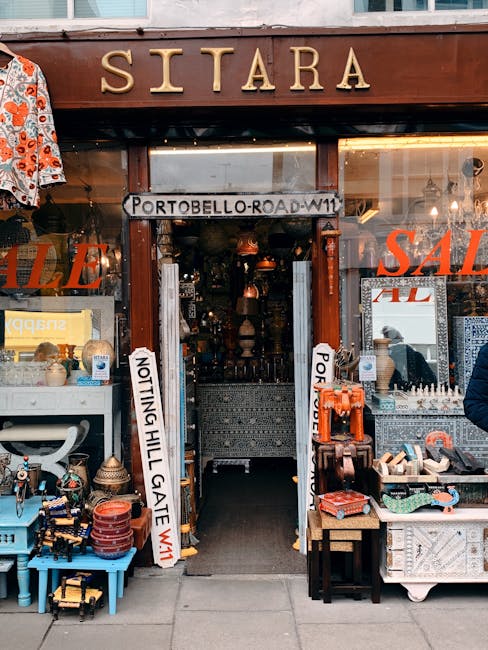
How we moved a Westbourne Grove antique shop without damage
Moving an antique shop is a different game altogether. You are not just shifting stock from one address to another; you are protecting fragile frames, old glass, carved furniture, mirrors, display cabinets, and pieces that may have more sentimental value than price tag. In Westbourne Grove, where access can be tight and the pace of the street never quite slows down, that matters even more. This guide explains how we moved a Westbourne Grove antique shop without damage, what made the move work, and what to watch for if you are planning something similar.
Truth be told, the hardest part was not the lifting. It was the thinking. Which items needed custom wrapping? Which could be moved in stages? How do you avoid scuffs on polished wood when a doorway is just a little too narrow? And how do you keep trading interruptions to a minimum? Let's walk through the process properly, because with antiques, "good enough" usually is not good enough.
Why How we moved a Westbourne Grove antique shop without damage Matters
Antique shops are not standard retail units. A normal shop move might involve shelving, stock boxes, and a few fixtures. An antique move often includes delicate items with uneven weight, loose joints, old finishes, mirror glass, ceramics, and display pieces that scratch if you look at them the wrong way. Even a small bump can turn into a repair bill, a lost sale, or a piece that never quite looks the same again.
Westbourne Grove adds another layer. You are dealing with a busy London street environment, local parking pressure, delivery timing, and the usual challenge of getting large items in and out without a fuss. If you have ever tried to turn a tall cabinet through a narrow entrance while a cyclist passes behind you and somebody orders coffee next door, you will know the feeling. Not ideal.
The point of a careful antique-shop move is not just to avoid breakage. It is to preserve stock condition, protect business continuity, and keep the shop ready to reopen without a long repair lag. That is the real value. A clean move means fewer write-offs, less stress, and far less "we'll sort that later" energy, which usually becomes expensive later anyway.
It also matters from a trust point of view. For a retailer selling heirloom pieces, provenance and condition are part of the story. Customers notice when a shop looks organised, considered, and well cared for. That starts long before the first item is displayed at the new address.
How How we moved a Westbourne Grove antique shop without damage Works
The move worked because it was treated like a sequence of small controlled tasks rather than one big lift-and-go job. That sounds obvious, but plenty of damage happens when people rush the process or assume one packing method suits everything. Antique stock is too varied for that.
At a high level, the process breaks into five parts:
- Survey every item and sort stock by fragility, size, and value.
- Plan the route, access points, and loading sequence before moving day.
- Pack using the right materials for each category of item.
- Move in a controlled order, protecting floors, walls, and corners as you go.
- Unpack, inspect, and position stock so damage can be spotted immediately.
What made the biggest difference was the pre-move inventory. We photographed items, noted existing marks, and identified anything that needed extra support. That way, if something had a tiny scuff beforehand, nobody was guessing later. Small detail, big relief.
We also separated the move into "handle once" and "handle twice" items. Handle-once items were packed and placed straight into their final crate or wrapped position. Handle-twice items were things that needed careful staging, such as cabinet doors, mirrors, or display components that had to be removed and reassembled. Less movement usually means less risk. Simple as that.
For readers comparing moving approaches, the same mindset applies whether you are moving a boutique, gallery-style showroom, or a mixed retail space. If you are also planning broader storage or move support, it can help to look at removals and storage or even a more focused secure storage option if the stock needs to sit safely between premises. For shop stock that is bulky but not immediately needed, that breathing room can be a lifesaver.
Key Benefits and Practical Advantages
Moving an antique shop carefully is not just about avoiding disaster. There are some very practical upsides that become obvious once you have done it properly.
- Less breakage: The most obvious benefit, but still the most important. Antique glass, gilt frames, and aged joints are unforgiving.
- Better stock control: A documented move makes it easier to confirm what arrived, what needs cleaning, and what may need restoration.
- Faster reopening: When stock is grouped logically, you can get the new space trading sooner.
- Lower stress for staff: Everyone works better when they are not improvising around an unplanned pile of furniture.
- Cleaner insurance trail: If there is ever a query, proper photos and item records help enormously.
- More efficient unpacking: Items go where they belong instead of being shuffled around three times.
There is also a quieter benefit that shop owners sometimes overlook: customer confidence. A well-handled move signals that you take condition seriously. In antiques, that is not a minor detail. It is part of the brand.
Expert summary: The safest antique moves are rarely the quickest ones. They are the moves with the best preparation, the least unnecessary handling, and the clearest inventory trail.
If you are trying to keep costs sensible without cutting corners, smaller support services can help too. For example, a well-planned small removals approach can suit modest shop inventories, while furniture storage may be useful if heavier display pieces need to be held temporarily during a refurbishment or phased relocation.
Who This Is For and When It Makes Sense
This kind of move is for anyone responsible for fragile, valuable, or awkward retail stock. That includes antique dealers, vintage furniture shops, picture and frame sellers, small galleries with sale stock, and interior traders who keep one-off pieces on site.
It also makes sense if your premises are changing for practical reasons rather than dramatic ones. Maybe the lease is ending. Maybe the new shop is better placed. Maybe you need a smaller footprint because stock has changed. Or maybe, to be fair, the current shop has become one of those places where everything is stacked just so, and you know a move is overdue.
If your stock includes any of the following, the move needs extra care:
- Glass-fronted cabinets
- Painted or veneered wooden furniture
- Framed artwork or mirrors
- Ceramics, porcelain, or decorative objects
- Mixed-size stock with awkward weight distribution
- Items that cannot simply be boxed without internal support
It is also worth considering whether you need help with the packing stage itself. Some shop owners can manage the move if the items are already boxed and labelled, but antique stock often benefits from professional packing. If the move is happening alongside a wider business relocation, a broader office removals approach can be helpful for admin desks, archives, tills, and back-office equipment too.
Step-by-Step Guidance
Here is the practical version of how to do it without turning the place upside down.
1. Audit every item first
Start with a room-by-room or shelf-by-shelf audit. Record each piece, note the condition, and flag anything that needs special handling. A simple spreadsheet is enough. You do not need a museum catalogue, but you do need enough detail to know what is what.
Take photos from more than one angle. If an item already has a small chip, scratch, or loose edge, write that down. This protects both the business and the customer relationship. And yes, it saves arguments later, which is always nice.
2. Group stock by handling needs
Do not pack by shop display order. Pack by risk. Put similarly fragile items together so the same packing method can be used consistently. For example, framed mirrors need edge and surface protection, while ceramic items need internal cushioning and a stable outer box.
Heavy items should be grouped separately from fragile items, even if they are sold together in the shop. Weight and fragility are different things, and treating them the same is where mistakes start.
3. Prepare the route, access, and timing
Westbourne Grove can be straightforward one minute and awkward the next. Check loading access, door widths, stair turns, pavement restrictions, and whether anything needs to be moved at quieter times of day. It is surprising how often a move runs smoothly simply because someone checked the entrance properly.
If access is tight, the route should be rehearsed before the first heavy item is moved. Measure the awkward bits. That sounds dull, but it is the sort of dull that prevents damage.
4. Use the right packing method for each item
Here is where antique moves live or die. Bubble wrap alone is not a complete answer. Sometimes you need corner guards, acid-free wrapping, furniture blankets, internal bracing, double boxing, or custom crates. The correct method depends on the object, not the price tag alone.
As a rule, polished surfaces should not rub against rough materials, glass should not carry weight from another item, and loose components should be removed where possible. If a drawer can move during transit, secure it. If a leg can twist, support it. If a mirror can flex, stabilise it. Small decisions, repeated well.
5. Load in a controlled order
Heavy and stable items usually go in first, with fragile stock secured separately and clearly marked. Leave enough room to avoid pressure points. Never let a heavy base rest against a delicate frame just because it "fits." It may fit. It may also wreck the finish.
This is also where good communication matters. One person should be directing the sequence. Too many voices on a narrow loading line can become a bit chaotic, and nobody needs that at 8:30 in the morning.
6. Unload with the same care as packing
A move does not end when the van arrives. In fact, some damage happens during hurried unloading. Place items in a protected staging area first, then inspect before final positioning. Check for movement, loosened fixings, or pressure marks. If something looks off, stop and sort it before it becomes a bigger issue.
7. Reassemble and display only after inspection
Once stock is in the new shop, rebuild display areas in stages. Start with the secure, heavier pieces, then move to the more delicate stock. Recheck doors, shelves, and wall fixings before loading them up. A display cabinet that looks fine at 10 a.m. can behave differently once stock is back in it, especially if the floor is slightly uneven.
Expert Tips for Better Results
These are the little things that separate a decent move from a genuinely careful one.
- Use inventory tags that mean something. "Fragile" is useful, but "glass top, base detached, handle separately" is better.
- Wrap like the item matters. Because it does. Overlapping layers are cheaper than repairs.
- Keep hardware in labelled bags. Screws, shelf pegs, fixings, and brackets go missing easily.
- Protect the shop as well as the stock. Corner guards, floor coverings, and doorway protection save headaches.
- Move the awkward items first. If there is a cabinet that only fits at one angle, do not leave it until everyone is tired.
- Allow time for inspection. Rushing the end of the move can undo all the careful work.
A small but useful habit: photograph items as they are loaded. That gives you a quick visual record of placement and wrapping. It also helps if you need to check whether an item was already marked or scuffed before transit. Handy, that.
If the move is part of a broader schedule, it can be worth comparing delivery timing and staged transport. In some situations, a flexible man and van setup is useful for smaller, more frequent loads, while larger or more structured moves may benefit from a more formal removals plan. The key is matching the method to the stock, not forcing the stock into the method.
Common Mistakes to Avoid
Most damage in antique moves comes from a handful of predictable mistakes. The good news is that they are avoidable once you know what to look for.
Relying on one wrapping method for everything
Not every item should be wrapped the same way. Glass, wood, metal, and fabric all behave differently in transit. Using the wrong material can trap moisture, cause scratches, or allow movement inside the wrap.
Skipping condition checks
If you do not note the item's condition before the move, you are left guessing later. That helps nobody. A five-minute photo record can save hours of discussion.
Overpacking boxes
Heavy items packed too tightly can crush lower pieces or strain the box. Better to split stock into sensible loads than to overstuff one container and hope for the best.
Forgetting about access issues
Many moves go wrong not because the packing was poor, but because the access was never properly planned. Narrow stairs, awkward corners, and parking constraints are not minor details. They are the move.
Rushing display reassembly
Once the stock is in, people want the shop looking normal again. Fair enough. But rushing straight to full display can hide damage or create instability. Take the extra half hour. It pays back.
A slightly awkward truth: some damage is caused by good intentions and a bit of overconfidence. "We'll manage." Famous last words. Better to slow down and feel mildly overcautious than to be fast and sorry.
Tools, Resources and Recommendations
You do not need a warehouse full of specialist gear, but the right tools make a difference. Here is what usually helps most in an antique shop move:
| Tool or resource | Why it helps | Best for |
|---|---|---|
| Furniture blankets | Protect polished surfaces and reduce scuffing | Cabinets, sideboards, display units |
| Corner protectors | Reduces impact damage on frames and edges | Mirrors, frames, shelving |
| Strong tape and labels | Helps keep items organised and identifiable | Boxes, fixings, mixed stock |
| Floor protection | Prevents scratches during loading and unloading | Shop floors, stairways, thresholds |
| Inventory sheets | Tracks condition and movement | All stock, especially high-value pieces |
| Secure storage | Keeps stock safe during phased moves or refurbishments | Overflow inventory, seasonal stock |
For businesses that need space before the final move-in, short holding periods can make the whole process calmer. A practical short-term storage arrangement may suit stock that is already packed, while business storage can be useful where inventory needs to stay accessible but out of the way.
It is also worth thinking about packaging materials that suit the stock, not just the budget. Acid-free tissue, proper padding, and sturdy cartons are worth the investment for many antique pieces. Cheap materials are rarely cheap if they cause a problem.
Law, Compliance, Standards, or Best Practice
For a shop move like this, compliance is mostly about sensible business practice, safety, and care. You do not want staff taking avoidable risks, and you do not want stock or premises damaged because basic procedures were ignored.
In the UK, a move should be planned with general workplace safety in mind. That means using suitable lifting techniques, keeping walkways clear, and reducing trip hazards. If items are unusually heavy, awkward, or fragile, it is sensible to use the right equipment and enough people rather than trying to "make do."
If the shop is in a shared building or a managed property, you may also need to consider building rules, access windows, and any instructions about loading or waste handling. In central London, these practical restrictions can matter just as much as the packing itself.
Insurance is another key point. Always check what is covered during loading, transport, and unloading. Some policies have conditions around packing standards or declared item values. It is better to understand that before moving day than after an incident. We also suggest reviewing the company's own insurance and safety guidance alongside internal procedures so the whole move stays aligned with best practice.
For sustainability-minded moves, consider whether packaging can be reused responsibly and what can be recycled after unpacking. That does not mean cutting corners. It means using materials properly and disposing of them thoughtfully. A careful move and a tidy footprint can go together just fine.
Options, Methods, or Comparison Table
There is more than one way to move an antique shop, but not every method suits every stock profile. Here is a simple comparison.
| Method | Best for | Pros | Trade-offs |
|---|---|---|---|
| Full professional removals | Larger antique shops with varied stock | Organised, safer for mixed items, less owner workload | Usually needs more planning and coordination |
| Small removals approach | Smaller shops or limited stock moves | Flexible, often quicker to schedule, suited to modest inventories | May need more owner involvement in packing |
| Phased move with storage | Businesses moving in stages or between premises | Reduces pressure, gives time for sorting and refitting | Requires extra handling if not well planned |
| Direct same-day move | Simple stock lists, clear access, minimal setup | Fast, less time in transition | Less forgiving if access or timing goes wrong |
For many antique retailers, the best option is a phased move with selective storage. That gives breathing room for fragile pieces, display planning, and any last-minute access issues. If you need more home-to-shop overlap support, a broader removals service can also help keep the job tidy and controlled.
Case Study or Real-World Example
Here is the kind of situation that typically comes up in a Westbourne Grove antique shop move.
The shop had a mix of display cabinets, framed prints, carved side tables, smaller decorative stock, and a few heavier statement pieces that could not be handled casually. The street access was workable, but only if the loading order was planned carefully and the team stayed disciplined about where each item sat once it left the premises.
The move was broken into categories. Fragile wall stock was removed first and boxed with clear labels. Cabinets were prepared with internal padding and secured doors. Heavier furniture was wrapped with blankets and moved using equipment suitable for tight turns. The team checked each item at the point of loading and again on arrival. Nothing fancy. Just consistent care.
There was one awkward mirror that needed a second look because the frame was slightly loose at one corner. That is exactly the sort of thing that gets missed if people rush. Instead, the item was set aside, stabilised, and moved separately. Not dramatic, just sensible.
The result was a clean handover, no visible transit damage, and less time spent repairing or apologising. Which, let's be honest, is the ideal. The shop could reopen with confidence, and the owner was not left sorting out avoidable problems after the fact.
If your move has similar constraints around parking or access, it may be worth reading the practical advice in parking permits and access on Westbourne Grove and, for timing strategy, same-day vs scheduled removals in Notting Hill. Those considerations often shape the whole day more than people expect.
Practical Checklist
Use this as a final pre-move check. It is simple, but useful.
- Inventory completed and item conditions recorded
- Photos taken of all valuable and fragile stock
- Packing materials gathered and matched to item types
- Doors, stairways, and access routes measured
- Loading plan agreed in advance
- Heavy items separated from fragile items
- Fixings, keys, and hardware labelled
- Floor and corner protection ready
- Insurance cover checked for loading and transit
- Destination layout prepared before arrival
- Unpack and inspection time built into the schedule
- Waste and recycling plan decided in advance
One-line reminder: if the checklist feels a bit overcautious, that is usually a good sign.
Conclusion
How we moved a Westbourne Grove antique shop without damage came down to preparation, patience, and a proper respect for the stock. There was nothing magical about it. No secret trick. Just careful categorisation, the right packing approach, sensible access planning, and a steady hand at every stage.
If you are planning a similar move, the biggest lesson is this: antiques reward calm thinking. They punish shortcuts. So take the time to measure, label, wrap, inspect, and move in a sequence that makes sense. It will feel slower at first, but it is usually faster in the only way that matters - fewer problems afterwards.
Get a free quote today and see how much you can save.
And if you are standing in the middle of a shop wondering how on earth all those pieces will make it safely to the next place, breathe. It can be done, and it can be done well.
Frequently Asked Questions
How do you move antique furniture without damage?
You move antique furniture by planning each item individually, protecting vulnerable edges and surfaces, and avoiding unnecessary handling. The safest approach is usually to wrap, brace, and lift with enough people and equipment rather than forcing pieces through tight spaces.
What makes an antique shop move different from a normal shop move?
Antique shops usually hold fragile, uneven, or one-off items that cannot be treated like standard retail stock. A normal shop move might focus on speed, but an antique move needs much more attention to packaging, condition records, and route planning.
Should I pack antique items myself or hire help?
It depends on your stock, your team, and your confidence with fragile items. Smaller, sturdy pieces may be manageable in-house, but glass, mirrors, cabinets, and high-value stock are often safer with professional packing support.
How early should I start planning the move?
As early as you reasonably can. For a shop with mixed antique stock, early planning helps with inventory, insurance questions, access checks, and stock grouping. Leaving it until the final week tends to create rushed decisions, and rushed decisions are where damage tends to start.
What packing materials are best for antiques?
Furniture blankets, corner protectors, sturdy boxes, acid-free wrapping for delicate finishes, and strong tape are all commonly useful. The best material depends on the object. A polished cabinet and a framed mirror need different protection, after all.
Can antiques be stored before or after the move?
Yes, and that is often a smart idea if the move is phased or the new premises are not ready yet. Short-term or secure storage can reduce pressure, especially for stock that does not need to be displayed immediately.
How do you protect shop floors and walls during a move?
Use floor coverings, corner guards, and clear walkways. Protection matters as much for the premises as it does for the stock, particularly in tight entrances or older buildings where scuffs happen quickly.
What should I check on arrival at the new shop?
Check each item for movement, damage, loose fixings, or marks before it is placed on display. That way you can resolve any issue immediately and avoid mixing transit damage with existing stock condition.
How can I reduce downtime for the shop?
Group stock by priority, prepare the destination layout in advance, and use a phased moving plan if needed. The smoother the unpacking sequence, the quicker the shop can get back to trading.
Is insurance important for an antique shop move?
Very much so. You should check what is covered during packing, loading, transport, and unloading. It is also sensible to understand any conditions about declared values or packing standards before the day begins.
What are the most common mistakes people make?
The biggest mistakes are using one wrapping method for everything, failing to record condition before the move, ignoring access restrictions, and rushing the unpacking stage. Those are all avoidable, which is why they are so frustrating when they happen.
How do I know if I need a phased move?
If the shop has a lot of fragile stock, awkward access, or a new premises that is not fully ready, a phased move usually makes sense. It gives you more control and reduces pressure on the day.
What is the best next step if I am planning a move in Westbourne Grove?
Start with an inventory and an access review. Once you know what you have and how it will leave the building, the rest becomes much easier to plan. That first step sounds basic, but it sets the tone for the whole move.